

Before you’re pregnant — before the apps, the opinions, the group texts — there’s a quiet window most people skip entirely. It’s the moment when you’re thinking about trying. Not panicking. Not Googling at 2 a.m. Just… considering. And I've been there, too.
But you know what? This is where the smartest preparation actually happens.
Not because you need to optimize every molecule in your body — but because early decisions reduce future stress. About your mental and physical health. Your relationship. Your money. Your mental load.
This guide is about what to do before pregnancy turns into a full-time project — so when it does, you’re not starting from zero.
Why Preconception Planning Matters More Than You Think

It’s completely normal to feel a mix of excitement and a little bit of "where do I even start?" when you decide to grow your family. The answer is simpler than you think: start with a dedicated visit to your healthcare provider. This isn't just your annual physical; it's a focused conversation all about optimizing your health before you're pregnant.
The whole point is to be proactive. You’ll work together to spot and manage any potential issues ahead of time, which is far less stressful than dealing with them after you’ve already conceived.
This timeline gives you a bird's-eye view of what to tackle and when.
As you can see, the groundwork starts several months out, with the key medical appointments happening closer to when you plan to officially start trying.
To help you stay organized, here's a quick-glance table of the key health actions you'll want to take.
Schedule a Preconception Checkup Before You Start Trying
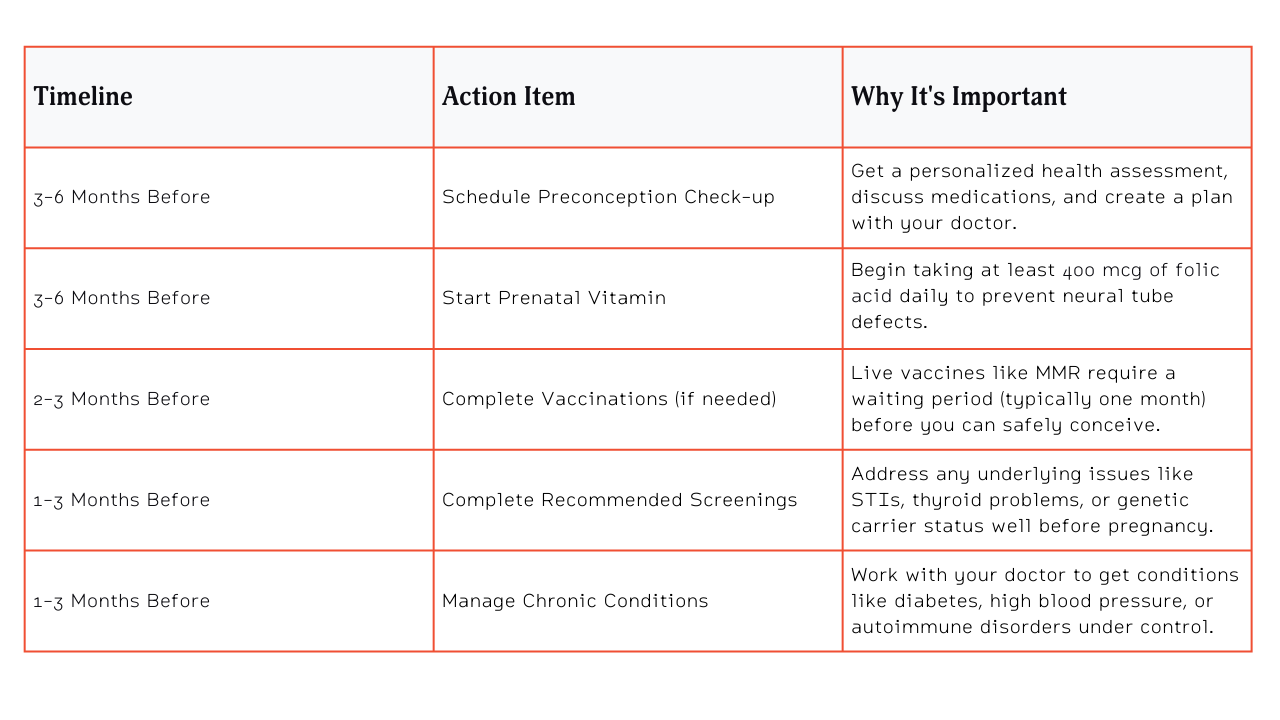
This timeline isn't meant to be rigid, but it gives you a solid framework for tackling the most important health to-dos in a logical order.
What Happens at a Preconception Appointment
Think of a preconception appointment less like a medical hurdle — and more like a strategy meeting.
You’re not “looking for problems.”
You’re reducing unknowns.
Your doctor will want to get the full picture, so they’ll dive into your personal and family medical history to check for any hereditary conditions. You'll also have a candid chat about your current lifestyle—diet, exercise, and habits like smoking or drinking that you'll need to address.
Here’s what will be on the table for discussion:
- Medication Review: Your provider will go through every prescription, over-the-counter med, and even herbal supplement you're taking. Some are perfectly fine, but others used for common issues like acne, high blood pressure, or anxiety might need to be switched for a pregnancy-safe alternative.
- Vaccination Status: Being up-to-date on your shots is crucial. Your doctor will especially look at your immunity to MMR (measles, mumps, rubella) and varicella (chickenpox). Since these are live vaccines, you have to get them at least one month before trying to conceive.
- Chronic Health Conditions: If you're managing something like diabetes, a thyroid disorder, or an autoimmune disease, getting it under control before pregnancy is non-negotiable. This dramatically reduces risks for both you and your future baby.
Tests and Screenings to Do Before Getting Pregnant
Based on your conversation and a physical exam, your doctor will likely suggest a few screenings. Don't let this scare you! The goal is to gather information so you can move forward with confidence.
"Think of this as creating your health baseline. It's about proactive preparation, not just reacting to issues as they arise. By addressing these items early, you are giving yourself and your future baby the best possible start."
Some common tests you might discuss include:
- Sexually Transmitted Infections (STIs): It’s a sensitive topic, but undiagnosed STIs can impact fertility and lead to serious pregnancy complications. It's better to know and treat them now.
- Thyroid Function: An underactive or overactive thyroid can mess with ovulation and is linked to a higher risk of miscarriage, so a simple blood test to check your levels is a smart move.
- Genetic Carrier Screening: This test checks if you or your partner are silent carriers for serious inherited diseases like cystic fibrosis or sickle cell anemia. Many people are carriers without any family history, so it can provide invaluable peace of mind.
When to Start Taking Prenatal Vitamins (and What to Look For)
If there's one thing you'll hear over and over, it's this: start taking a prenatal vitamin now. Don't wait until you get a positive pregnancy test. The superstar ingredient here is folic acid.
Taking at least 400 micrograms (mcg) of folic acid daily for a minimum of three months before you conceive can slash the risk of major birth defects of the baby’s brain and spine. These defects happen in the first few weeks of pregnancy—often before you even know you're pregnant—which is why that head start is so critical.
Sadly, preconception care is still one of the most underused tools for boosting maternal and infant health. Studies consistently show that many women don't have these crucial health discussions before getting pregnant. You can learn more about the global impact of preconception care and see why this preparatory period is so effective for managing health factors that directly influence pregnancy outcomes.
Lifestyle Changes That Support Fertility and Pregnancy

What to Eat When You’re Trying to Conceive
I like to think of a preconception diet as "pre-mester" training for your body. The goal here is to load up on the specific nutrients that are crucial for healthy ovulation, hormone balance, and the earliest stages of fetal development. You really don't need to do a complete dietary overhaul; it's the small, consistent changes that often have the biggest impact.
For instance, start by weaving in foods that are packed with fertility-boosting nutrients:
- Folate: This B vitamin is a non-negotiable for helping prevent certain birth defects. You can find it in leafy greens like spinach and kale, plus lentils, asparagus, and broccoli.
- Iron: Getting enough iron is key to preventing ovulation issues. Lean meats, beans, and fortified cereals are all great sources. A quick tip: to help your body absorb it better, pair these foods with something rich in vitamin C, like bell peppers or a small glass of orange juice.
- Antioxidants: Think of these as your eggs' bodyguards. Found in colorful foods like berries, nuts, and vibrant veggies, they help protect your cells from damage.
At the same time, it’s smart to dial back on a few things. High-mercury fish (like swordfish and king mackerel) are best avoided for now. It’s also a good idea to cap your caffeine intake at around 200 milligrams a day, which is roughly one 12-ounce cup of coffee.
Exercise and Weight Considerations Before Pregnancy
Exercise is fantastic for managing weight, busting stress, and boosting your overall health—all wins for fertility. The key word, however, is balance. Pushing yourself too hard can sometimes mess with your menstrual cycle, but being too sedentary can also create its own challenges.
The real goal is to find a routine that you actually enjoy and can stick with. Try to get about 30 minutes of moderate activity on most days. This could be anything from a brisk walk with a podcast, a calming yoga class, swimming, or cycling. The best exercise is the one you don't have to force yourself to do.
When it comes to fertility, a healthy weight can be a significant factor. For those who are overweight, research shows that losing even a modest 5–7% of your body weight before pregnancy can dramatically improve health outcomes for both you and your future baby.
Habits to Stop Before Getting Pregnant
This is the time to get really honest about habits that aren't serving your long-term goals. If you're a smoker, quitting is one of the single most impactful things you can do for your fertility. Smoking can directly damage your eggs and interfere with ovulation.
Similarly, it's best to significantly cut back on alcohol or eliminate it altogether while you're trying to conceive. Since there's no established "safe" amount during this time, stopping removes any potential risk.
Beyond substances, it's worth taking a look at your environment. Many everyday products, from plastics to certain cleaning supplies, contain chemicals that can act as endocrine disruptors. You can easily reduce your exposure by:
- Switching to glass or stainless steel containers for food storage instead of plastic.
- Choosing cleaning products with simple, recognizable ingredients.
- Opting for fragrance-free lotions and cosmetics where possible.
How Stress and Sleep Affect Fertility
Sleep and stress are two of the most overlooked—and most important—pillars of wellness when you're preparing for pregnancy. Chronic stress can throw the hormones that regulate your cycle out of whack, and a consistent lack of quality sleep only makes it worse.
Try to get 7-9 hours of sleep per night. A relaxing bedtime routine can work wonders. Maybe that’s reading a book (not on a screen!), taking a warm bath, or doing a few gentle stretches.
Managing stress is a deeply personal thing. For some, it’s a daily meditation app. For others, it's a long walk outside or just venting to a good friend. Find what works for you and helps you feel grounded and calm as you move through this exciting chapter.
Relationship Conversations to Have Before Trying for a Baby

The road to parenthood is just as much an emotional journey as it is a physical one. It’s easy to get laser-focused on ovulation tracking and prenatal vitamins, but taking the time to nurture your mental health and your relationship is just as crucial. Think of it as building a strong foundation now, so you can enter this next chapter as a solid, supportive team, ready for anything.
Couples often get so swept up in the logistics of trying to conceive that the emotional check-ins fall by the wayside. This time before pregnancy is a unique window to connect, have the tough conversations, and build a set of coping strategies that will serve you for years to come.
Aligning On The Big Questions
Before you’re knee-deep in diapers and dealing with sleep deprivation, it’s the perfect time to talk through your expectations for parenting. Getting on the same page now can head off some major arguments down the line. It's not about having identical views on everything, but about understanding where your partner is coming from and finding your shared middle ground.
These conversations can feel a little heavy, but they’re so important. Here are a few prompts to get you started:
- Parenting Philosophies: "Thinking about your childhood, what are some things your parents did that you'd love to carry on? What would you do differently?"
- Division of Labor: "Let's be real—how do we see the household chores and baby care shaking out? Who's on night duty? What happens when someone is sick?"
- Work and Family Life: "What are our gut feelings about childcare? How can we make sure we both feel supported in our careers and still get some personal time?"
- Fears and Worries: "What are you most excited about? And on the flip side, what’s the one thing that secretly terrifies you about becoming a parent?"
Remember, the point isn’t to solve every hypothetical problem before it happens. It’s about opening those lines of communication and practicing how you’ll navigate challenges together. This is one of the most valuable things you can do before getting pregnant.
Supporting Your Mental Health Before Pregnancy
Your individual mental health is the bedrock of your future family’s well-being. Pregnancy and the postpartum period are a whirlwind of hormonal shifts, identity changes, and a whole new level of pressure. Preparing for this emotional marathon now is an incredible act of self-care.
I always recommend creating a "mental health toolkit"—a personalized set of resources you can lean on when you start to feel overwhelmed.
Consider adding a few of these to your kit:
- Map Out Your Support System: Who are the people you can call on a really tough day? Make a list. Include friends, family, or even a support group—anyone who can offer a listening ear without judgment.
- Pinpoint Your Coping Mechanisms: What genuinely helps you de-stress? Is it a long walk outside, a 10-minute meditation app, scribbling in a journal, or blasting a favorite playlist? Figure these out now so they become go-to habits.
- Find a Professional: If you have a history of anxiety, depression, or other mental health challenges, now is a great time to connect with a therapist specializing in perinatal mental health. Having that relationship already in place before you conceive can be an absolute lifesaver.
Nurturing Your Partnership
Beyond all the big, serious talks, don't forget to just enjoy each other. This is such a special time in your relationship. Make a real effort to prioritize date nights, take a weekend trip, or even just have a quiet, screen-free evening at home. Celebrate the partnership that will be the foundation for the family you’re hoping to build.
A strong connection isn't just about grand gestures. It's built in those small, everyday moments of kindness, appreciation, and shared laughter. Focusing on this now fills your emotional reserves, giving you a deep well of goodwill to draw from when life inevitably gets more complicated.
Common Questions on Getting Ready for Pregnancy
When you're thinking about starting a family, questions pop up constantly. It’s completely normal! Here are some straightforward answers to the big questions we hear all the time.
How Long It Takes to Get Pregnant (What’s Normal)
This is the million-dollar question, isn't it? The truth is, there’s no single answer. The timeline is different for every couple.
That said, for healthy couples under 35, statistics show that around 80% get pregnant within six months of trying. But remember, things like age, overall health, and how regular your cycle is can really influence how quickly it happens. The best advice I can give is to be patient with your body and focus on the healthy habits we've been talking about, rather than getting hung up on a specific timeframe.
Should Your Partner Prepare for Pregnancy Too?
Yes, 100%. This is a team sport, and male fertility is just as important. Think of it as a joint effort to create the healthiest possible start.
Your partner can make a huge impact by focusing on a few key things:
- Eating a nutrient-dense diet full of antioxidants.
- Staying active and maintaining a healthy weight.
- Cutting back on alcohol and definitely quitting smoking.
- Avoiding high heat in the groin area—so, less time in hot tubs and maybe not resting a hot laptop on their lap for hours. This can affect sperm quality.
I always recommend a preconception check-up for partners, too. It’s a great chance for them to ask their own questions, check on any health issues, and get personalized advice on boosting their fertility.
When to Stop Birth Control Before Trying to Conceive
The "right time" really depends on the type of birth control you're using. If you’re on a hormonal method like the pill, patch, or ring, it might take a month or two for your natural cycle to get back on track after you stop.
On the other hand, if you have an IUD removed, your fertility can return almost right away. Your preconception visit with your doctor is the perfect time to map this out and create a timeline that feels right for you.
Build a Baby Registry Before You’re Pregnant (Yes, Really)
Feeling prepared is a powerful first step. With a baby registry like Poppylist, you can build a baby registry that’s just as thoughtful as your preconception plan. Features like group gifting and delayed delivery make everything simpler from the start.